
12 Mar ISB Sport in Nafent vol.17
Interview in Nafent by Ernesto Abad from ISB Sport
When we talk about innovation in bearings today, where is it really happening? In materials, sealing, lubrication, or in the combination of all these elements?
It’s really the combination of all these elements. They all play an important role, but three are especially relevant:
Lubrication: it’s the big “hidden ambush”, as people often call it, although its importance is increasingly being discussed even among advanced amateurs. Every part of the bike where bearings are fitted should be lubricated with a specific grease. Fortunately, brands are already working on this area, sometimes in collaboration with bearing brands and, above all, chain brands.
If we focus on road cycling, the grease for bottom bracket and wheel bearings needs to be viscous enough and, at the same time, long-lasting to prevent attacks from external elements and to help keep friction as low as possible. Each bearing manufacturer has its own preferences when it comes to the type of grease they assemble with. For that reason, when a bearing is opened as part of “poor maintenance”, you can find anything inside.
In our case, if we do it, we recommend a complete clean and refilling with a single type of grease. Also, the amount inside isn’t a lottery: there’s a formula, depending on the diameter of the part, to calculate the grams of grease to inject.
Another interesting case is the grease for headset bearings, where sweat, water and acids from gels, etc, attack in a deadly way. Here the grease should be very specific.
Materials and lubrication technicians can draw conclusions from a poorly made bearing that has failed just by looking at the colour of the damaged ring, the final colour of the grease, etc.
Ultrasonic cleaning: the quality of a product is revealed in small details, but in the bearing production process, cleaning via ultrasonic machines is what makes it possible to achieve, in the next steps of the production chain, the desired quality. The raceways of the inner and outer rings, with a prior demagnetisation process, must be washed to expel micro-swarf, invisible to the human eye, which, if not removed, when assembling the balls and the grease would cause marks on the ring raceways, leading to bearing noise and, in the end, seizure.
Nowadays, and in my opinion, small ultrasonic cleaning machines have given today’s mechanics an extremely important step forward to deliver quality in their professional service.
Antioxidant materials: evolution in materials is one of the key aspects of innovation. Producing in stainless steel is very expensive and, fortunately, with origins in the agricultural and food industries, we have reached the point of producing the famous black oxide. With this micro-layer of phosphate, 2 microns on the surface of the outer ring, the steel is protected, and chromium steel is effectively transformed into a material mix with improved corrosion resistance. This material mix is recommended for all bicycle bearings.
Looking back over the last decade, what has been the most important innovation in bearing technology that has made a real difference in performance or durability?
In recent years, across any sport industry, the overall leap has been almost like comparing the internet to AI. Thanks to Formula 1, MotoGP and aerospace, we’ve learned that materials are, and will continue to be, 95% of product evolution, and product design, geometry and everything else make up the rest.
So-called ceramic bearings, the term is often used incorrectly because they can be hybrid or 100% ceramic, are the big “what” and the major breakthrough in the cycling sector. They originated in CNC machine tools, where spindles spin at 25,000 to 55,000 rpm, and a bearing was needed that could remain stable under the extremely high temperatures caused by those speeds, and would not seize. The solution was a bearing made with a special steel, ball cages in a special material, phenolic, and ceramic balls, Si3N4, combined with a specific high-temperature grease, which turned it into the star of the show.
Over time, this high-precision bearing was certified for Formula 1 and the aerospace sector, among others, because it did not heat up and there was no loss through increased friction. A ceramic or hybrid bearing with materials that are not quite so sophisticated is what premium component manufacturers are offering today. The quality increase is clearly there, but it should be said openly that it was designed for high-rpm applications, and the benefit on our bikes will not come if we only fit it in the wheels or the bottom bracket, it comes from using it across the whole bike, including pulley wheels.
This innovation takes us back again to the grease topic because, in the case of ceramic hybrid bearings for bicycles, the amount of grease injected is studied right at the limit of its intended use, and that is where reliability and durability come into play.
These bearings are recommended for disciplines such as road and triathlon, but we should always be aware that they have a shorter lifespan than a 100% standard steel bearing.
People often talk about testing, but rarely explain it. Can you give a concrete example of something ISB has learned from working with sponsored athletes or teams, and how it ended up improving a product?
Our bearing testing is carried out across different racing disciplines such as XCM, XCO, downhill and enduro, working closely with the teams we sponsor, who effectively become our test benches. At the same time, these competitions also help us get ISB Sport approved by the bike brands used by those teams for their production.
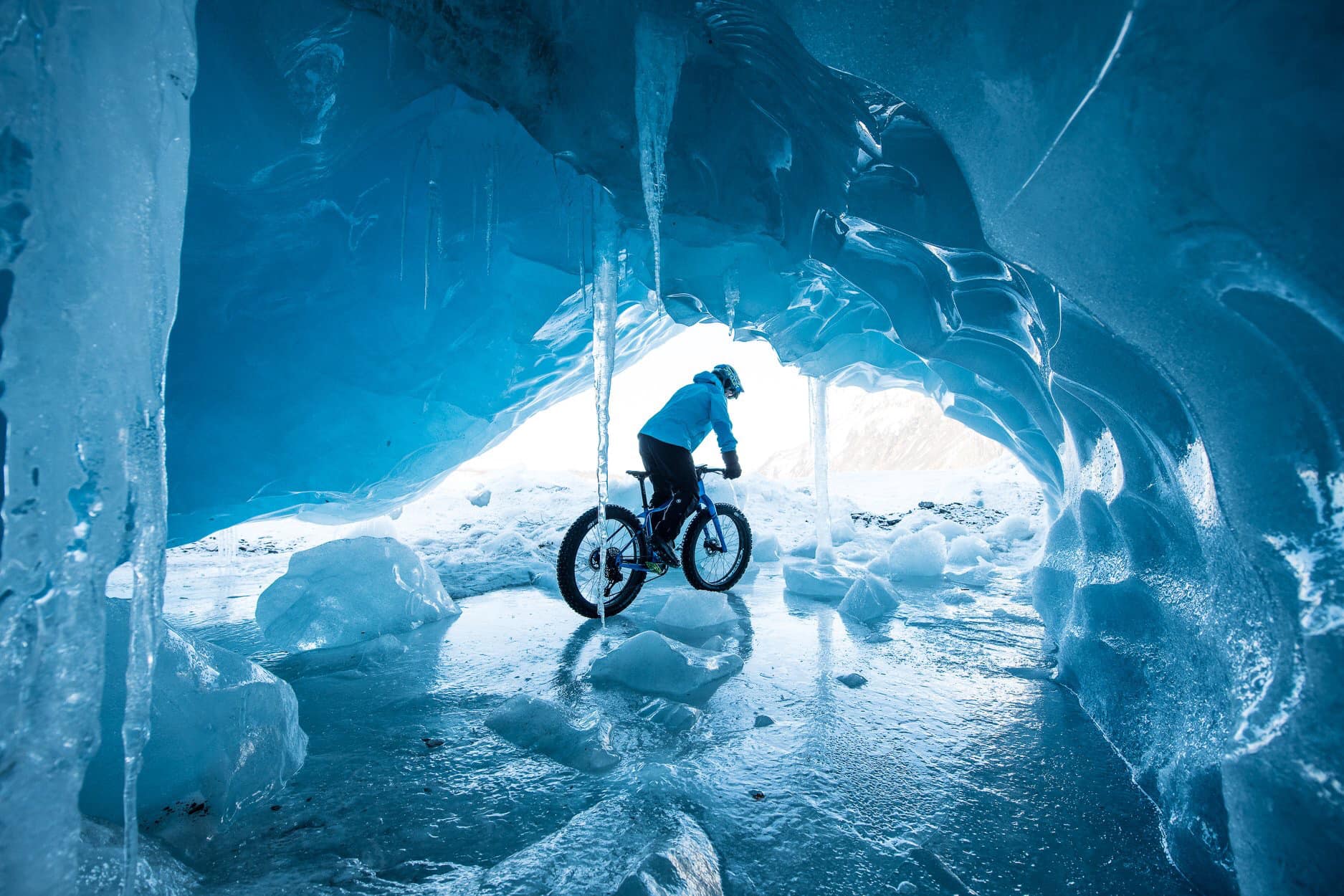
One of the most authentic testing experiences we’ve done with ISB was crossing Lake Baikal in southern Siberia on fat bikes. Temperatures dropped to minus 20 to minus 30 degrees, and we spent six days in constant contact with water, snow and ice. At night, the wheels, bottom brackets and headsets would not roll, the low temperatures would lock everything up. For that adventure, the grease and the material choice, stainless steel, were essential, and the test was 90% successful.
In downhill, where bikes take a beating from every angle, the pivot bearings known as Vmax, which have special characteristics, and the fork seals are giving us very interesting results. They point us towards where future improvements could go.
Barcelona is a city with a wide range of cycling, urban, road, gravel and competition. Does being connected to Barcelona influence the way ISB approaches innovation or product development?
ISB is an Italian registered brand, founded in 1971, and our connection with Barcelona began in 1992, when our family’s bearing factory had to close due to a number of economic factors, and above all because of the threat that Asian industry represented for the power transmission sector.
Fortunately, there are still industries in the cycling world that continue to invest in our country, specifically here in Catalonia, Barcelona and the rest of the region. We try to get closer to cargo bike manufacturers, for example, a sector that is evolving fast across Europe and that is gradually reaching us too. This sector, together with sustainability and last-mile delivery mobility, really motivates us, and we try to make the most of the windows that open up.
A clear example is the support we provide through sponsorship of bike messengers, which gives us visibility and priceless credibility, because it proves that our bearings and components can withstand extremely tough working conditions, heavy cargo loads, pavement slabs, rain and toxic elements, kerbs, and impacts to the rims.
On the business side, with the support of the Generalitat and the Light Mobility Cluster, we have managed to launch a social project for the Barcelona area, backed by R&D funding, and designed around two strands, one focused on school public transport services, and the other on energy generation in sports centres through a system patented by ISB Sport, based on a unique bike model.
We don’t know how far it will go, but Barcelona is an international design hub and a gateway for bringing this kind of innovative project to both investors and young talent coming out of Catalan schools such as Elisava and IED Barcelona.
Looking ahead, where do you think the next big step in bearing innovation will come from, new materials, manufacturing processes, or a different way of understanding friction and efficiency?
The evolution of bearings from a design perspective is complex, and it mainly sits with the big multinationals. For them, the concern is not so much new designs, but guaranteeing future production.
It’s true that the air bearing has already been invented, with zero friction, it uses a thin film of pressurised gas to provide a low-load bearing interface. But the real issue lies more in raw materials and supply funds.
If we look at the periodic table and analyse the mineral reserves the world still has, we can see that steel, which is recyclable, thankfully, and carbon or phosphates are in the hands of a few countries, China, the USA, Japan, Russia and India, and that is where the problem will be.
At ISB Sport, over the next five years we want to focus on finding young talent from the new generations, and on creating departments focused on innovation and sustainability.
Finally, how do you see the role of ISB Sport, and your personal influence as CEO, in shaping the direction of innovation in cycling over the coming years?
From my position, I can speak about our strategy within cycling. Today, we have already had the Helyos by ISB Bike or Trike project underway for a few years. With this project, now in its final stretch in terms of design and innovation, we aim to achieve the World Record Velocity, and it would be the first giant step to make ISB Sport known internationally within the cycling sector.
We are collaborating with top-level naval engineering firms that will turn our theoretical calculations into reality. From there, the routes and opportunities that may arise are unpredictable, but we are clear that one of the main goals is, and will be, to support young female and male talent. We do so in sport through our current U23 team, ISB Factory Cyclistwork, in the XCM discipline, and also on the business side, through the creation of future divisions focused on R&D, sustainability, and more.